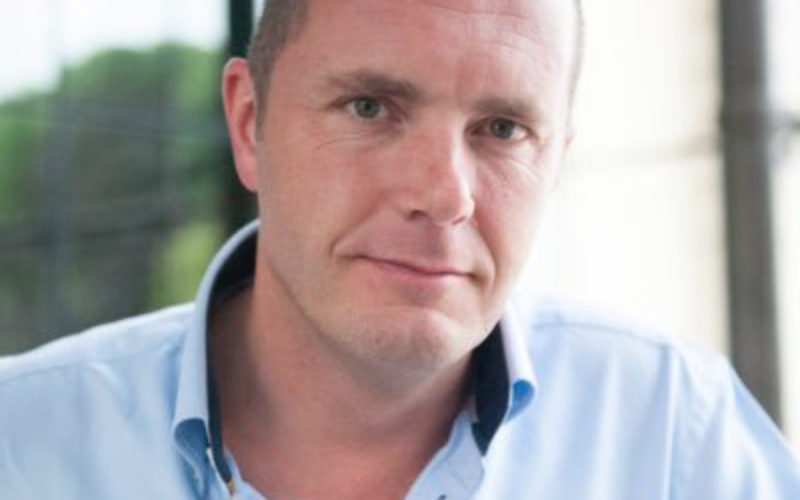
Sven Bossu, CEO of AIPC, says live events are coming back because the global economy needs it
The year of 2021 has seen us go through the cycle of hope, fear, and disappointment. Most recently, the high hopes continental Europe had for Q4 were crushed by the fourth Covid-wave, which will most likely also push back the projected 2022 business boom in the region.
On the other hand, we see business booming in the US and China, Australia re-opening at full capacity for domestic events and Southeast Asia slowly opening for international organised events.
The big trend is clear: live events are coming back – not because the events industry wants it, but because the global economy needs it. The big question is: will the authorities allow us to make this happen?
A recent report from Access Intelligence Research & Consulting on North America showed that events held in 2021 (up to November) have recovered 66% of their pre-pandemic attendance base. When asked when business would be back to pre-pandemic levels, 42% indicated this would happen in 2022 and 35% gave 2023 – figures that show a level of optimism and drive which reflect something different: the global need to meet in person again.
This is also demonstrated by the shift in key challenge areas in the same report. In the summer of 2021, the key challenge areas were mainly sitting with pandemic-related low attendance (72%) and government/corporate restriction on travel (58%) and replacement with online alternatives (42%). By November, the concern with online alternatives dropped to 30%. It was no longer about going digital, but about how to make it possible for communities to meet face-to-face and how governments are (not) helping to do so.
The same type of discussion took place at the Annual Conference of the Convention Centers of Canada (CCoC), where executive director Barry Smith and I agreed to continue the strategic alliance between our organisations. Beth Potter of the Tourism Industry Association of Canada put it clearly: “We know that there is much confusion right now regarding the new variant and the changing travel rules and restrictions. Our biggest priority through this is clarity for the industry, and ensuring we advocate for one, pan Canadian process. As we start to see provinces and territories reacting with their own measures, we need to ensure we are vocalising the need to not move backwards into a fragmented system.”
One would imagine that, by now, governments have understood the importance of organised events, not only because of the (short-term) impact on the local economy but also because of the (long-term) impact on global trade, collaboration and innovation as demonstrated by the global manifesto of the Joint Meeting Industry Council (JMIC) on the use of business events as primary agents for post-pandemic economic recovery and renewal.
Advocacy efforts on different levels are indeed resulting in a better understanding of the organised events industry. A good example was the roadmap published in October by the New South Wales, Australia authorities for planning Covid-safe major events and which was co-created by the government and the events industry.
This type of collaboration makes me optimistic for the future of organised events.
Let’s close on some key figures that the Events Industry Council published: “Pre-pandemic, business events generated $621.4bn of direct GDP and contributed a total economic impact of $1.5 trillion (global gross domestic product). If the sector was a country, it would rank as the 13th largest in the world.” But what is not included in these figures is perhaps even more important: the long-lasting impact business events have on the development of global trade, collaboration, and innovation