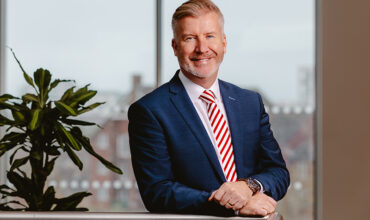
President and CEO of Professional Convention Management Association (PCMA) Deborah Sexton, and chairman of the PCMA board of directors, Ray Kopzinski, explain the moves they are taking with the association, and shed some light on the needs of a global meetings association.
Revenue for associations is typically derived from membership fees and congresses but, as Sexton points out, this is an old way of thinking in today’s meetings landscape. “Any organisation that is hanging on those two revenue streams exclusively is probably going to be out of business soon,” she says.
“At the PCMA we are looking at two tracks: the traditional membership track, for people who really want to be engaged with the organisation on a chapter level, who want to come up through leadership and do the traditional things we are used to.
“Then we look at the other track, the customer track, which is potentially a hundred times greater because those are the people today who want to engage with our organisation in the way they want to, for what they want to, when they want to and they don’t want to be told how to do that,” she says. “So, we as an organisation have to make sure that that the customer is able to engage with us in the manner they wish to.”
According to Sexton, this is one new revenue scheme that didn’t exist with the traditional association model. The same applies to sponsorship, new product development, product sales and advertising. This all has to be looked at in a different way and, for want of a better word, aggressively. Because, as Sexton points out, that diversification is going to ensure the health of your organisation. “That’s very important, and it’s very global in nature,” she says.
One specific area of expansion for the PCMA is the renewed focus on what it terms ‘megacities’. The association is looking at 15 in particular, following the expansion of the largest cities, particularly in Asia. “We have to be prepared to handle that expansion and be able to identify and satisfy the needs of those people within those marketplaces.”
Another is the development of apps. While they may only have been in existence for seven years, Sexton points out that they sell more places at the association’s events than are sold via box office.
“All our organisations are living within this space,” she says. “I must get five calls a day about ‘the next big app’. But we must not look at the shiniest things, let’s look at what can really deliver for our members and our attendees.”
The seemingly overwhelming task of applying Big Data
On top of that, associations talk about big data. But what is it and how do is it handled effectively? Lots of data is not big data, rather, big data is achieved by comparing lots of industries together.
“I would compare it with sustainability, in that it seems like such a large, overwhelming project that we feel as though we can sit back and not step into,” says Sexton. “Perhaps we think that’ll we’ll be better off without it. But that’s not the case, you have to step into it.”
To this end, PCMA is building a database of all the destinations, not just the major locations. Select a destination and you will be provided with a database of all the tiny projects that your organisation can take advantage of, such as those which relate to sustainability, or a positive story behind that destination. “It’s very hard to keep up with that when you’re moving your events all over the globe, so the more destinations we get committed to this the easier it will be to do projects within destinations,” says Sexton.
Kopzinski claims the future of an association in the MICE industry may not actually be dependent on its live event content. For an industry that dedicates much of its time to speech and information delivery, it would be short-sighted to limit its scope to the stage.
“We talk about meetings being a delivery system, but there are many Massive Open Online Courses (MOOCs),” he says. “It’s startling. I remember the other day I stumbled across all these online courses from Harvard.
“It’s not quite the same as being instructed by a mentor able to interact with people in a live learning environment but it’s a method of delivering information that wasn’t possible to deliver a few short years ago.”
Kopzinsky says that in the meetings industry, if all the organiser has is an information delivery system, that is rivalled by another system where everyone can do this anywhere at any time, then one of the primary needs of members is being overlooked. “That’s why we have to begin to reformulate our dynamic and look into satisfying what are additional needs that people didn’t have necessarily 15 years ago, and be ready for that when it occurs.”
“People came to meetings in the past to get information which they may have been able to get by spending all weekend in a library poring through books. But now they can get that at the touch of a button in the comfort of their own home,” he says. “How can we persuade people to come to meetings, join associations or visit destinations if we don’t understand the needs behind those behaviours.”
Advertisers do a tremendous amount of data mining to understand those needs. However, according to Kopzinski, the scary thing is that people might actually not be aware of the needs that motivate them.
“These needs may actually sit a little below the surface and may not be the most powerful motivators, so we’re going to have to become better at discerning what they are.,” he says. “Why did they come to this meeting and why did they join the association they’re a member of? Why do they travel to a certain city? Why do they buy products? Why do they drive a certain kind of car? All of these things relate to specific needs that you have, that these products, service, memberships and locations are satisfied.
“Is it the need to belong, that you come to meetings or join an association or is it a different need?” he asks. “Whatever it is, we need to figure it out and be able to satisfy it – because if we don’t satisfy it we won’t be relevant no matter how focused we are. If we don’t understand and prioritise which of these needs our audience has, how they can be fulfilled and in what order, we are not going to be effective.”
Both Sexton and Kopzinski, in their roles at the PCMA, want to be sure they have products and services that fill the needs of their audience in 2020, and not just today. “Because if we rely on the products and services of the things we do today, no matter what industry you’re in, it’s not going to prepare you for the future,” says Kopzinski. “You have to anticipate. Anticipation is paramount in the success of any endeavour – knowing where the trend lines are going and trying to get in front of that and defend yourself against those changes that you see coming.”
The industry, members or otherwise, looks to association events when considering the future of events. A consideration of the needs of future clients and visitors will ensure the live event medium is future-proofed as much as possible.
“But how is it going to impact us? As the use of virtual/hybrid meetings and the use of streaming video has impacted us, we now have to budget for it, but in 15 years will we all be wearing headsets?” Kopzinski asks. “One thing’s for certain, you know it’s going to affect us.
“We think there is a tremendous need for what we can offer, and we have a lot of tools that can satisfy these numerous and personalised and unique needs of our demographic,” he says. “We can’t make the assumption that we will define that. We have to let our potential audience define that.”
Or as Sexton puts it: “Our charge as an organisation in this industry is to innovate, is to create, to educate, and to take risks on behalf of professional organisers of face-to-face – and digital – events.”