In 2029, it will be exactly 70 years since the first Nobel Prize was awarded to what was then Czechoslovakia. Professor Jaroslav Heyrovský received the award in 1959 for his discovery of polarography, a chemical method used to analyse solutions. Prague will now symbolically celebrate this important anniversary by organising the World Chemical Congress of the International Union of Pure and Applied Chemistry (IUPAC), which will take place in the Czech capital in 2029.
The congress is held every two years and attended by several thousand experts in the field of chemistry. The event‘s importance is accentuated by it including the meeting of the IUPAC General Assembly and the IUPAC Council as the highest body of the Union.
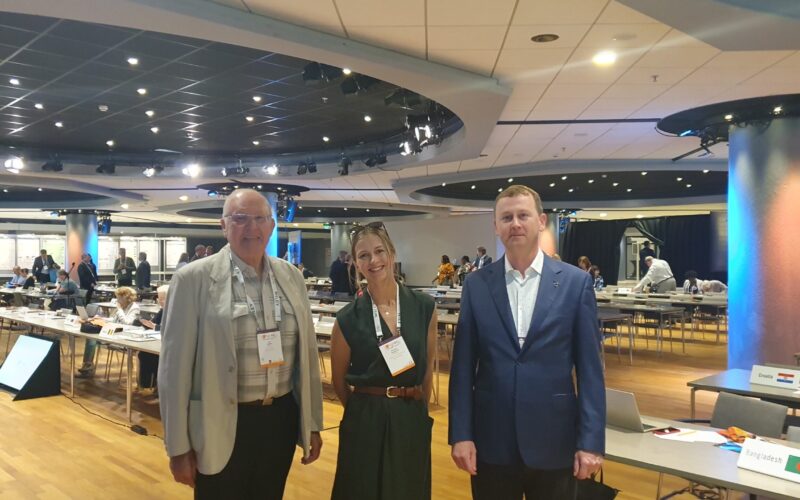
Prague’s 2029 bid proposal was presented in the Hague, the Netherlands, by representatives of the Czech and Slovak Chemical Society and the Prague Convention Bureau. A secret ballot of delegates of national organisations of IUPAC member states resulted in a win for the Czech capital.
“We ran for the World Chemical Congress two years ago, unfortunately unsuccessfully. I am very pleased that we successfully presented the winning proposal this year, beating the competing destinations, which were the Asian cities of Chengdu and Taipei, and Düsseldorf in Germany. In 2029 we will present an interesting congress programme, the main topic of which should be ‘Frontiers in Chemistry: For the Harmony of Civilisation with Nature‘, and which will build on the long and famous scientific research tradition of Czech and Slovak chemistry,” says prof. Dr RNDr. Pavel Matějka, chairman of the congress and rector of the University of Chemistry and Technology in Prague.
“The main topic and title of the congress point to the fact that today’s civilisation cannot exist without the products of chemical production. However, for the sake of sustainability, it is necessary to diminish the negative effects that production and its outputs have on nature and on the natural processes,” adds prof. Jiří Vohlídal from Charles University, currently the chairman of the Czech Chemical Society, adding: “In addition to this focus, the proposal includes a special symposium on electrochemistry to celebrate the 70th anniversary of prof. Jaroslav Heyrovský’s Nobel Prize as part of the congress.”
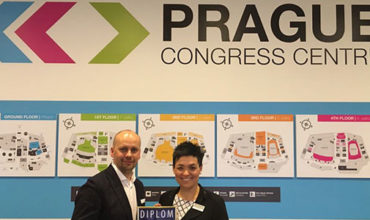
The congress will take place at the Prague Congress Centre.
For the first time in the history of this event, the winning proposal for organising the congress was submitted jointly by two national chemical societies – the Czech and the Slovak. “The joint candidacy of the Czech and Slovak Chemical Societies was one of the strengths of the proposal. This uniqueness resulted from the common history and tradition of chemistry in the once unified country. Co-operation between the two countries has been maintained to this day, at various levels, from informal collaboration and national support of joint projects to regular joint conferences in individual fields of chemistry, through organising umbrella chemistry congresses and organising such important events as the International Chemistry Olympiad,” adds prof. Igor Lacík from the Institute of Polymers of the Slovak Academy of Sciences in Bratislava, vice-chairman of the congress and representative of the Slovak Chemical Society.
Obtaining this congress means not only an immediate economic benefit for Prague in the form of the stay of 4,000 delegates for the entire week of the congress, but especially an influx of global know-how in the field.
“All this contributes to the internationalisation of Czech and Slovak science and the application of research results in practice, which subsequently benefits the general public,” adds Ing. Michaela Smetanová, senior manager – business events at Prague Convention Bureau, who participated in presenting the congress offer of Prague in The Hague.
IUPAC is a global organisation of academic and industrial chemists founded in 1919. It supports sustainable development and education in chemistry by means of sharing scientific information and forming a common language of chemists through recommendations in the field of chemical terminology.