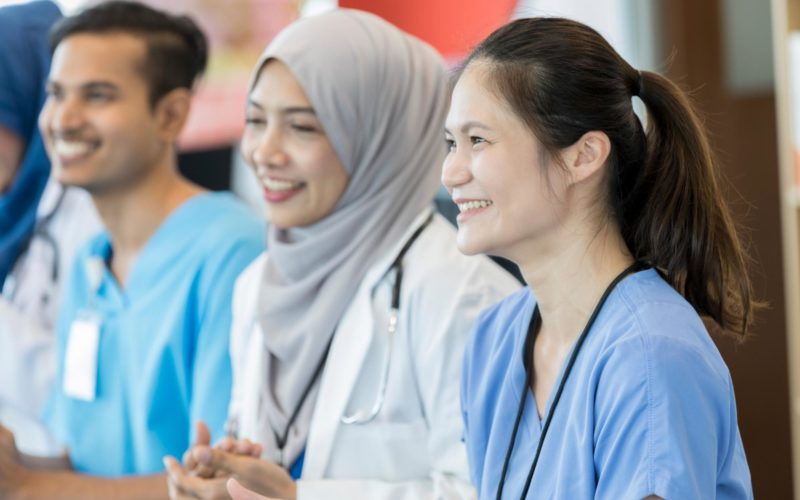
More than 80 interventional neuro-radiologists from Australia, New Zealand, and the United States attended Friday’s NeuroExchange conference to discuss the latest in treatments for stroke and brain aneurysms.
A further six medical conferences on the Gold Coast, attracting more than 4,600 delegates, have already been scheduled for 2022 and 2023.
Pre-pandemic, major international conferences were worth almost $36 billion to the Australian economy.
Medical and scientific conferences, which make up 50 per cent of business meetings globally, are considered extremely valuable economically for business events – as business events contribute $570 million to the Gold Coast economy.
Destination Gold Coast’s head of business events, Selina Sinclair, commented that Australia’s health and medical industry had grown considerably over the past decade: “Events such as NeuroExchange continue to grow our credentials, evolve our intellectual capabilities and knowledge networks, and create lasting legacies for the city,”
Sinclair added: “Beyond the direct economic contribution these business events inject into the Gold Coast economy, they also lead to new partnerships and attract talent to our hospitals, universities, and research institutes.”
Released in June, The Queensland Tourism Industry Reference Panel’s report called ‘Towards 2032: Reshaping Queensland’s visitor economy to welcome the world,’ found that, before Covid, Queensland hosted only about 16 per cent of Australia’s business events and 18 per cent of delegates. These figures were below interstate rivals New South Wales and Victoria.
New training centres
However, with lucrative medical conferences restarting, the state’s business events strategy means that Queensland can build strength to secure events looking for new destinations. Additionally, the return of the medical and scientific conferences comes as two major new medical training centres were unveiled on the Gold Coast.
Griffith University’s Institute for Glycomics has launched an Australian-first centre dedicated to deciphering the cancer glyco-code.
Researchers at The Australian Cancer Research Foundation (ACRF) International Centre for Cancer Glycomics will identify changes in carbohydrates and sugars and their interactions with proteins and lipids in several cancers.
“Our research will provide major advances in the early diagnosis of significant cancers, including skin, ovarian and breast cancer,” Institute for Glycomics director, professor Mark von Itzstein, said.
“This facility, with its diverse and multi-disciplinary team of researchers, will underpin the opportunity to better understand the glyco-code and lead to the translation of novel discoveries and clinical outcomes that will improve the lives of countless cancer sufferers around the world.”
A new training centre for image-guided surgeries is also preparing to open within the Gold Coast Health and Knowledge Precinct.
Director of Interventional Neuroradiology at Gold Coast University Hospital, Dr Hal Rice, said that the training centre would be launched following the NeuroExchange conference.
Rice added: “Our vision is to train specialist physicians from all over the Asia-Pacific in the latest techniques in a dedicated facility, building on the training we’ve conducted over the last eight years within the hospital, with the latest equipment and space to accommodate larger groups.”