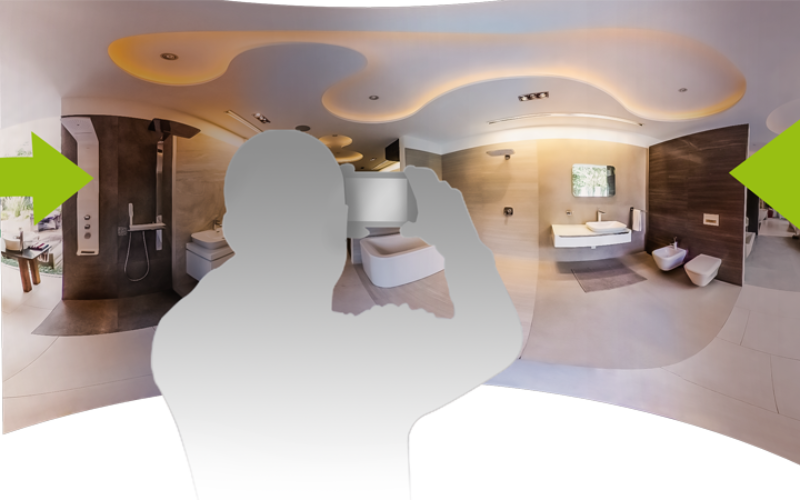
A new way of showcasing your destination offering to the global meeting producers marketplace is getting attention
Augmented reality is one of the most widely discussed and least successfully exploited technologies available to the global meetings industry. In the eyes of its exponents, its correct use has far-reaching benefits and could determine the permanence of not only this technology but of the products it serves.
To others it is just another unnecessary technology hindered by the need to download yet more software for your phone; in order to get your device ready to detect augmented reality, you need to download an app.
Imagine the pitch. You’re sat in a meeting with a representative from a venue you’re considering for your event, carefully trying to picture the configuration of a ballroom in which they are trying to convince you to stage your annual congress. Suddenly the salesman reaches for their business card and the inevitable pamphlet, and you go for your briefcase; it’s time to go.
Then they hand you their phone and ask you to view the page they have open through the screen of the phone, utilising the camera. You are greeted by a 360-degree manipulable image of the inside of the ballroom, arranged in both the theatre and roundtable formats you were considering for your event. You move the screen over an image on the next page and the outdoor breakout space leaps out at you as if you were standing there capturing it on video yourself. They have successfully engaged you. To paraphrase Leonardo DiCaprio’s character in Quentin Tarantino’s Django Unchained, they had your curiosity, now they have your attention.
The reason for the interest in augmented reality is that by and large it is designed for the mobile phone, and given the blanket use of mobile technology, there is considerable scope for its use. It is a technology that works best accessed through mobile platforms such as smartphones and tablets, with some element of printed material.
So why has it not been picked up and widely exploited yet?
“This is a win-win technology revelation,” says Fernando Espinosa, commercial director of Comunikha, a technology company based in Guadalajara, Mexico. “Here is where the marketing departments have advantage on both sides.”
This future of business cards and promotional material means users can transmit more information on the piece of paper they hand their clients. Brochures, flyers, booth exhibitions, banners and so on can be equipped with this innovation too. The resulting augmented reality applications include not just 3D venue images, but product visualistion and even streaming videos.
Espinosa believes the reason for the lack of uptake is tied to the fact it is not being properly matched to the requirements of the market.
“Previous technologies have passed without the expected success due to the wrong implementation,” he says. “We tell our clients that they will show their ‘company’s muscles’ through this technology.”
Augmented reality is an emotional technology, and as such industries that sell emotions are the first ones related with it (business tourism, for example) but the scope for implementation is very broad.
Some venues need to be seen to be believed, and with augmented reality it may be possible to do so.