In the 17th century, the Hanseatic League united port cities from northern Germany to Russia. CMW takes A snapshot of current meeting trends in destinations along the route.
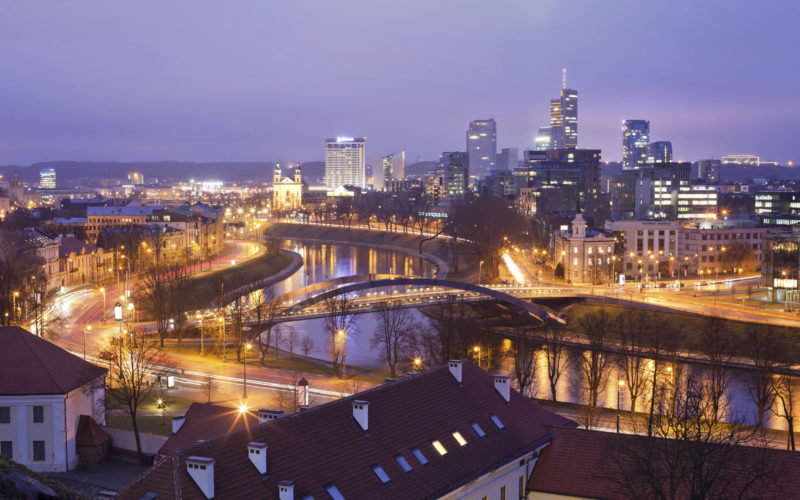
Vilnius
The most important venue in the capital of Lithuania was opened two years ago. The Palace of the Grand Dukes of Lithuania, situated in the Cathedral square, is the best place to get a broad overview of the country’s history.
The former political, diplomatic and cultural centre of the nation, today offers facilities for meetings, gala dinners and receptions.
Gothic, Renaissance and the early Baroque halls will suit the highest standards and requirements. The capacity of the biggest hall is 500 delegates and a courtyard can accommodate up to 2,000 guests.
A new centre will rise Phoenix-like from the old sport palace, capable of seating 3,000 delegates with breakout meeting facilities. The facility is a 15-minute walking distance from most of the city’s hotels. Planning processes are underway and the scheme will be unveiled at the Baltic trade show Convene in February.
Estonia
In spring last year, Estonia hosted a “Meet Estonia 2015” fam-trip, attracting 29 participants from eight countries across Europe.
Organised jointly by Enterprise Estonia, Estonian Tourist Board and Estonian Convention Bureau, the event gave 29 professional event planners and association representatives a taste of what Estonia has to offer as a meeting destination. In addition to visiting the main conference and event venues, modern conference hotels and unique historical sites, the visitors had a chance to experience an active incentive programme that included a night-time tour of Tallinn’s Old Town and edge-walking on the 22nd floor of the Tallinn TV Tower (at a height of 175 metres), a truly unique experience.
The opening event was held at historical Tallinn Town Hall, where the guests were greeted by Mr Arvo Sarapuu, deputy mayor of Tallinn.
It was the sixth year that the Meet Estonia fam-trip was taking place. The managing director of the Estonian Convention Bureau, Kadri Karu, said that the number of meeting planners interested in participating in the Meet Estonia fam-trip has continued to grow every year.
She said that it is rewarding to recognise that the previous trips have already resulted in actual co-operation and more events choosing Estonia as their next meeting destination.
“Estonia is a new and exciting destination, where conference infrastructure is fully up-to-date, and which offers good value for money. We are also a compact destination, where all hotels and venues are within walking distance and free Wi-Fi is available nearly everywhere. Therefore, we believe that Estonia has a lot to offer for international meeting and event organisers,” Karu said.
During the trip, international meeting planners had also a chance to attend a workshop with local suppliers, and a large number of them took part in post-tour visits to the university town of Tartu or Lahemaa National Park and Vihula Manor Country Club and Spa.
Meanwhile, The Estonian Convention Bureau has gone live with a revamped version of its website, www.ecb.ee.
Designed by the Okia digital agency, the new site makes heavy use of photos to highlight Estonia’s attractiveness as a meeting destination and includes numerous technical features that make it more user-friendly for perspective conference clients.
Hamburg
Hamburg’s meetings industry has long developed into a prosperous business sector. The city continues to record rising numbers in overnight stays, and Hamburg has been able to surpass previous records also in the conference and congress segment. Hamburg is a stronghold for brands, a media city, the third largest civil aviation location in the world, and one of the most important reloading points and ports in global trade. The centuries-old relationships with the Far East, as well as the Baltic, gave rise to the city’s reputation as being the gateway to the world. More guests from abroad are discovering Hamburg and the surrounding region and are being inspired by Hamburg’s culture, history and unique venues. The most striking example of urban innovation is the HafenCity district, the largest development project in Europe, as well as the imposing Elbphilharmonie concert hall at the edge of new quarter. The Elbphilharmonie with its on-site hotel promises to be a world-class event location and, even at this stage, it impresses with its innovative design and its central location. The adjacent Speicherstadt warehouse district with its brick façades provides an unusual space for events.
As a growing metropolis, Hamburg is opening more and more new doors, especially in the area of event planning. The city provides a broad range of hotels, conference rooms and venues in prime locations for every occasion, every taste and each with very different flair. In particular, Hamburg stands out for its traditional expertise in the event industry and its dense network of professional service providers.Hamburg’s main target markets are the Benelux countries, Scandinavia, the United Kingdom, Germany, Austria, Switzerland and the United States.
Florian Gerdes at the Hamburg Convention Bureau says: “In these countries we attend the major industry events such as IMEX, ibtm, M&I Forums, and Meetings Space. In addition, we arrange our own sales trips, with and without local partners, and organise Hamburg events.
Stockholm
Sweden’s capital Stockholm has been ranked the eighth most competitive city in the world, and is likely to maintain its ability to attract investment, tourists and workers until 2025, according to a newly released global study.
The study, conducted for Citigroup by the Economist Intelligence Unit, ranked 120 cities around the globe on their competitiveness now and up to 2025. Competitiveness is defined as a city’s ability to attract investment, workers and tourists, among other measures.
Stockholm climbed five points in
the 2013 charts, recording the biggest jump from last year out of all the top 10 cities, highlighting the city’s success as a hub of innovation and reflecting the country’s stable economy.
The Swedish capital was one of three European cities — alongside London and Paris — in the top 10.
On the hotel front, the Scandic Continental opens for business on
1 April 2016 offering 25 meeting rooms for up to 300 people.
Scandic is offering Scandic Express meetings at some hotels, which you can book without advance planning.