
Pacific World’s Harsha Krishnan is strategic development director at global DMC Pacific World. He has been a key player in the re-launch of the company as a global MICE company since 2011. Here he talks about some of the key trends impacting our industry, its most popular destinations and demands being placed upon them.
What is the most important planning consideration in global events today?
Given today’s geopolitical climate, and from a corporate perspective, security is a number one concern and priority when planners decide on a destination. The planners’ main priority is that people are safe, and have a smooth stay wherever they’re going. Where everything follows a plan and there’s no chance of last-minute changes or issues with planning.
But while the geopolitical situation of the country is important, security is also impacted by policy and the way the MICE business is organised in the destination.
The quality of infrastructure in a destination impacts the impression that someone has on the security of a destination. Look at South Korea; fantastic infrastructure. It’s probably the top destination in terms of infrastructure, at least in the Far East, in terms of conferences and meetings.
But there are of course major security issues in South Korea, primarily due to North Korea. Every once in a while they lob a missile across the sea of Japan and people get worried. There are 30,000 US soldiers stationed in South Korea, which in any other country would be a cause of concern. But given the way that the Korean tourism organisation has managed to overcome this and the impression, the experience when people travel in South Korea is one of utmost security. You have no doubts the country is secure.
Is it possible to change people’s perception of security?
In 2002 there were the Bali bombings, which impacted very badly on the destination that year and the following years. But, from a geopolitical point of view that has now stabilised, and the recent elections in Indonesia went off peacefully. Bali is moving away from the problems that they had in the past.
Australia is the number one market for Indonesia and we’ve seen a pickup in Australian business into Bali. Also Australians are getting over the fears they’ve had. We’ve also seen a strong interest in Bali from Americans, for creative niche incentives.
Obviously Bali is part of Indonesia as a country, but it is not seen as something similar to the rest of Indonesia. It is a separate destination.
Are exclusivity and bragging rights still important factors when planners select a destination?
It’s increasingly difficult now to find a destination that nobody has been to. Particularly for high-end incentives or corporate meetings. People in these groups typically have significant disposable income and have travelled by themselves. So it is increasingly difficult to find destinations to which they haven’t been.
Perceived exclusivity of a destination is important, but so is experience of a destination. The client may have been to Bangkok or Phuket before but what we’re delivering for them is completely different. We want them to say: “Yes I’ve been to Bangkok but I’ve never done that before. I’d like to come back and do that with my family.”
In no way, shape, or form, are we the cheapest DMC, that’s obvious from our positioning. But what we can do is offer unique experiences.
Let’s say you’re an engineering firm. You’re bringing a number of engineers for a brainstorming session in Shanghai. As a DMC you’ll provide the airport transfer, the hotel and a few meals as basics, but the value added is ensuring that the whole atmosphere, the design, the set up of the meeting rooms is all adapted to the objective of the meeting that’s being held in the first place. All these different things impact on how the programme is viewed by the client and whether they are wowed by it.
It’s not just whether it’s Shanghai or Hong Kong or Monaco, it’s how we package it. And that’s really what has changed. Ten years ago it was about selling the destination itself. You could sell Shanghai because of Pudong, the beautiful restaurants and the view across the Bund, the Chinese culture and the markets. That’s all fine and you can still sell it now, but you need to add that extra step to ensure the product you are selling meets the needs of the clients in terms of all aspects.
Have you seen much destination reinvention in recent years?
Macao is pretty much the same case as Monaco [significantly repositioned at EIBTM 2014] but ten times larger. Macao is now trying to attract serious conventions and congresses. Obviously it’s a huge casino destination, particularly for the mainland Chinese market. But with the number of hotels they’ve got and the infrastructure of these hotels and meetings space, as well as the fact they’re building this fantastic bridge across from HK airport into Macao, I think Macao will brand itself to be a major conference and exhibition centre.
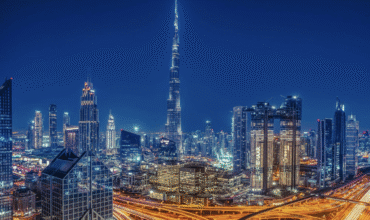
Dubai comes to mind as well. We’ve seen the result of that in our destination index. Visa requirements are helping Eastern Europeans. It’s a short- to medium-haul flight for most Eastern European destination and – with the visa exception – it becomes much more attractive for these destinations to have the event in Dubai, as attractive as it is to have it in Europe, say Barcelona, for example.
In this way Dubai is reinventing itself by making access easier, also through the positioning of its hotels. In the past they’ve positioned themselves as high-end luxury hotels. These are hotels that you wouldn’t and couldn’t send a corporate group to because it wouldn’t be seen as correct to do so. Particularly in the pharma business, for example. But now you have a huge number of other hotels coming in, standard chains, that are positioned at four star or four-star deluxe. So in this way Dubai is reinventing itself too.
What is the latest on India as a destination for events?
Change is happening, but it’s slow. But the company is going in the right direction. Airport infrastructure has improved dramatically in both the main airports in Delhi and Mumbai. You’ve got fantastic new international terminals and new hotel infrastructure.
What lets India down from an outside perspective is the transportation issues, particularly in the larger cities. But it’s a huge country, it’s not fair to say that brings down India as a whole because there are some really good hotspots. Hyderabad and Bangalore are great cities where we’ve seen large conferences take place, and our India offices have handled that. So, like China, it can’t be bundled up as one country. The individual destinations are different with different places going for them.
What’s the latest on your one year-old strategic alliance with Access?
Access is a major DMC in 12 cities in the US. We see the market evolving, and we share information on our marketing and our sales. The US continues to be the number one source market for Pacific World and because we are a European and Middle East and Asia-based DMC, that is also looking for a global one-stop solution, it was important for us to have a US partner.
Through Access, we now have North America as one coherent solution to all our clientele.